
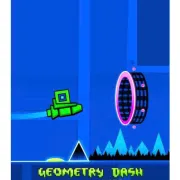
Geometry Dash GH
Hauptsitz
1922 Sundown Lane Austin, TX 78736 Sunrise Vereinigte Staaten
Industrie
Handwerk / Gewerbe
Über uns
Geometry jump games have a special charm: they feel simple at first glance, yet they become surprisingly deep the more you play. In a lot of these games, you guide a small character through quick stretches of danger, where every jump, dash, and landing matters. The fun comes from turning attention into timing, and timing into progress.
One of the most well known examples is Geometry Dash. Even if you are new to the genre, the experience can be welcoming. The challenge is clear, the feedback is instant, and the “just one more try” feeling is real—without needing anything complicated. What you really do is train your mind to read patterns, then respond with confidence.
If you want to experience a geometry jump in a way that feels satisfying rather than stressful, this guide focuses on how to play thoughtfully. The goal is not perfection. The goal is enjoyment through practice, rhythm, and small improvements you can actually feel.
Gameplay: What the Experience Feels Like
In Geometry Dash, you generally control a character that moves forward automatically. Your main job is timing your actions. Instead of thinking about steering for long moments, you spend your energy on the exact moment you press to jump, switch modes, or land safely.
A geometry jump usually happens in short bursts. For example, you might face a repeating sequence of obstacles that only looks chaotic until you slow down mentally. The game turns those obstacles into a kind of musical puzzle. Often, you can start to notice that dangerous gaps match the rhythm of the level’s music, or that obstacle patterns repeat every few beats.
Here is what makes the gameplay feel interesting:
First, the timing is tactile. When you press the jump button, the game reacts right away, and you learn quickly whether your timing was early, late, or just right. That instant feedback is motivating, because you are not waiting for some long, slow consequence.
Second, the level design teaches you through repetition. Many parts of a stage are structured as “learnable moments.” You might fail at the same spot a few times, but each attempt helps you understand how the pattern behaves. After a while, your brain starts predicting what comes next instead of simply reacting.
Third, the game encourages a calm mindset. Even when you miss, the next try brings you closer to reading the pattern correctly. You do not have to prove anything; you just keep observing. Over time, you begin to experience progress as smoother movement, steadier landings, and fewer “surprise” deaths.
As you play, you will also notice that difficulty does not always mean faster movement. Sometimes the challenge comes from changing gravity, switching forms, or navigating tight gaps where a small error becomes fatal. Those moments feel intense, but they become manageable when you approach them like a sequence of cues rather than a wall of difficulty.
Tips: How to Improve While Staying Comfortable
If you want your geometry jump sessions to feel fun, these practical tips help you learn effectively without turning the game into a stressful grind.
Start with easier stages and build confidence
When you first begin, it is tempting to jump straight into harder levels. However, the best learning comes from stages where you can make progress quickly. Choose levels where you can reach the same sections repeatedly with short attempts. That way, you gain pattern recognition instead of feeling overwhelmed.
A good sign is when your failures begin to teach you. If you keep dying in totally random places, the level may be too challenging right now. If you notice that you miss the same jump type or obstacle cluster, the level is probably perfect for learning.
Watch the pattern, not only the moment of failure
It helps to shift your focus from “I missed” to “I missed because of what I saw.” Before you press, ask yourself what the obstacle is telling you. Is it a series of evenly spaced blocks? Is there a clear gap size? Does the level use symmetry that repeats?
When you practice with this mindset, you start to read the level like a story. Instead of reacting to danger in isolation, you understand how danger evolves.
Use practice sections and checkpoints whenever possible
Many players improve faster by breaking difficult parts into smaller learning goals. Even if the game restarts a lot, you can treat each attempt like a mini lesson. Focus on one section until your timing feels consistent, then move on.
If your version of the game offers practice features, use them. Practicing a short stretch can save hours compared to repeatedly replaying an entire stage.
Train your rhythm through the music
Geometry jump games often have music that matches the flow of obstacles. You do not need to be a music expert. You just need to listen for repeating beats and patterns. When you feel the rhythm in your body, your timing becomes more natural.
A helpful approach is to play with your attention on the beat during early runs. Later, when you already know the pattern, you can focus on precision. In other words, first learn the tempo, then refine the timing.
Take breaks before frustration turns into guessing
When you are tired, you start guessing rather than learning. Try short breaks between attempts, especially if you notice your timing has become sloppy. A fresh mind usually improves your reaction accuracy immediately.
If you feel yourself rushing, stop for a moment and reset. Geometry jump success often comes from patience, not from speed.
Stay consistent with your controls
If you are using a keyboard, controller, or mobile device, aim for stable comfort. The goal is not to change your setup every session. Small shifts can affect muscle memory and timing. Keep your posture and finger placement comfortable so that your hands support your decisions instead of fighting them.
Conclusion
Playing a geometry jump is an experience of timing, observation, and rhythm. With Geometry Dash as a main example, you can enjoy a style of challenge that feels clear and repeatable. Each attempt teaches you something: how the obstacles behave, how the music cues your timing, and how your own reactions improve with calm practice.
If you take the game one section at a time, focus on patterns rather than panic, and protect your enjoyment with short breaks, the difficulty starts to feel rewarding instead of intimidating. Eventually, you are not just surviving jumps—you are reading the level like a sequence, then responding with confidence.
That is the real magic of a geometry jump: progress that feels earned, and fun that keeps growing with every run.
Unternehmensgröße
Kleinbetrieb (11-50 MA)
Gewünschte Berufsfelder
Medien- / Verlagswesen